

Anatomy of a Fire-Rated Doorset: Everything That Must Be Specified
Despite ‘fire door’ and ‘fire-rated doorset’ often being used interchangeably, there’s a big difference between the two. A certified fire-rated doorset is a complete assembly of tested components, from the door leaf and frame through to the hinges, seals and closer, all of which contribute to its fire performance.
The fire certification applies to the complete tested system, not individual components in isolation. This means that even seemingly minor changes, such as replacing a hinge or changing the glazing specification, can affect compliance if they aren’t compatible with the original tested assembly.
Understanding how these components work together helps architects, contractors and specifiers make informed decisions and avoid issues later on. In this blog we will work through the anatomy of a fire-rated doorset and explain how every component plays a role in achieving certified performance.
A fire-rated doorset begins with the door leaf
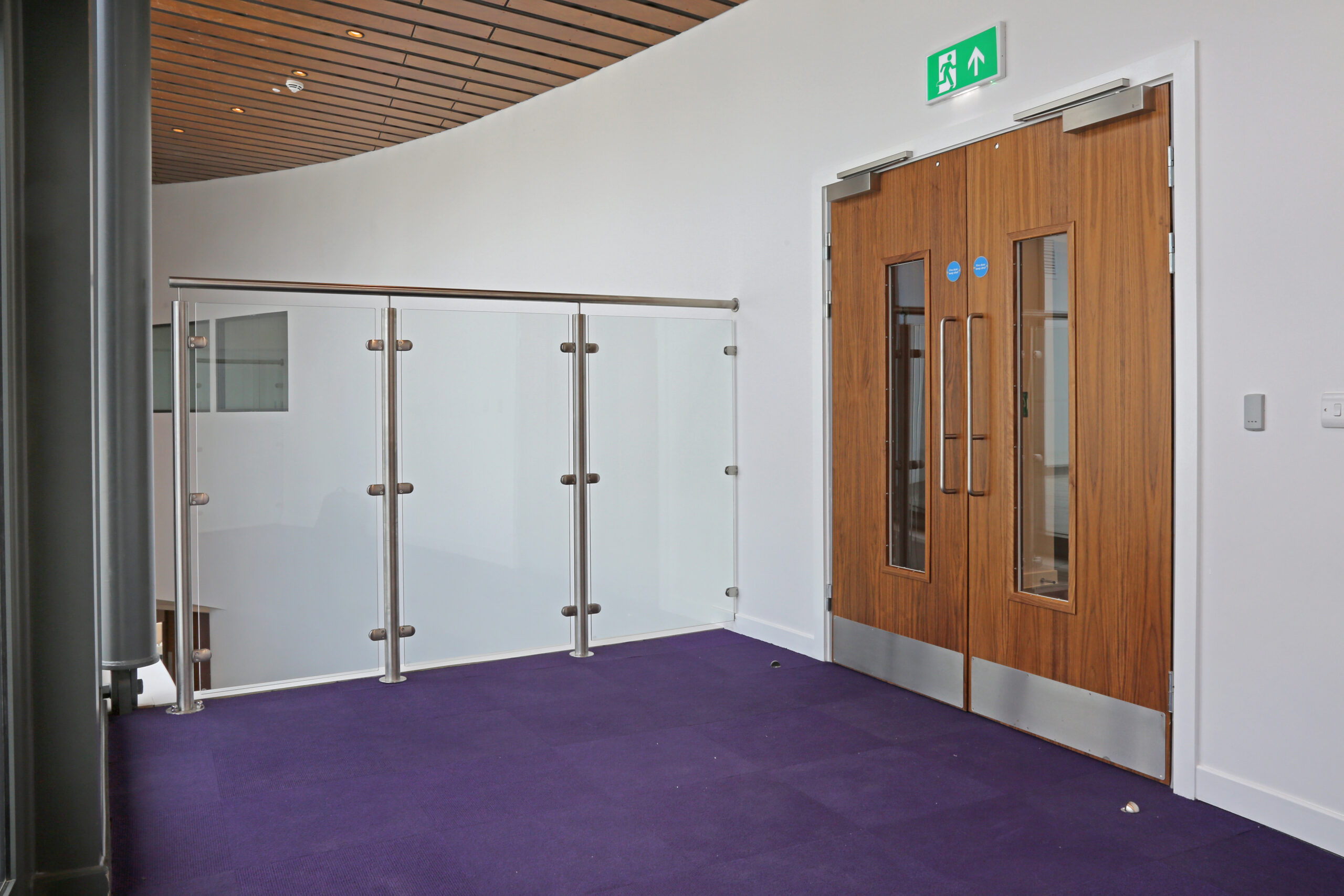
The door leaf is the central component of any doorset, but on its own it does not create a compliant fire-rated assembly. Fire door leaves are tested to resist the passage of fire for a specified period, commonly FD30, FD60, FD90 or FD120. Fire rating requirements depend on the building design and fire strategy, so different applications require different performance levels. Fire door leaves are manufactured using tested core materials designed to resist heat, maintain structural integrity and slow the spread of fire.
Fire doors must also withstand everyday use while continuing to perform as intended. The door leaf provides the foundation of the doorset, but it cannot achieve its certified rating without the correct supporting components.
The frame completes the foundation
Not to be overlooked, the door frame is just as important as the door leaf. Fire door leaves and frames are tested together and designed to work as a complete system. Frames help to maintain the correct clearances around the door to ensure seals perform correctly and the door closes as intended. Incorrect frame dimensions, unsuitable materials or poor installation can affect the overall fire performance – factory preparation can improve consistency by ensuring hardware positions and machining are completed accurately before products arrive on site.
Using compatible frames reduces the need for site modifications that could compromise fire performance, so the leaf and frame should always be considered together.
Ironmongery plays a critical role
Hinges
Hinges support the weight of the door throughout its life, so fire-rated hinges must be tested for use with certified doorsets. They must be able to continue performing under high temperatures while allowing the door to remain correctly aligned. Hinge specification is vital, as incorrect specification or quantity can affect the door operation during normal use and in the event of a fire.
Locks and latches
Fire doors are designed to remain closed during a fire unless they form part of an approved hold-open system. Locks and latches help maintain compartmentation by ensuring the door closes securely into the frame. This means fire-rated locks and latches must be tested as part of the complete doorset assembly.
Door closers
Door closers ensure fire doors close automatically after every use, as a door left open cannot perform its intended function. The closer used must be suitable for the weight and size of the door while remaining easy enough for everyday users to operate, and closing speeds, opening forces and accessibility all need to be balanced.
Handles and escape hardware
Handles provide safe day-to-day operation whilst providing a safe escape route in an emergency; therefore, escape hardware must comply with relevant standards where required. Escape hardware should also support accessibility and allow users to operate the door safely and comfortably. Selecting compatible, tested hardware helps maintain the certification of the complete doorset.
Individually these components may appear small, but together they determine how reliably the doorset performs throughout its life.
The hidden components that make all the difference
Some of the most important elements of a fire-rated doorset are also the least noticeable. Once installed, seals and glazing blend into the overall appearance of the door, yet they play a significant role in its certified performance.
Intumescent seals
Installed around the edge of the door or frame, intumescent seals are designed to react when exposed to high temperatures. As heat builds during a fire, the material expands to seal the gaps between the door leaf and frame. This helps slow the passage of fire and maintain the integrity of the compartment for the duration of its fire rating.
Smoke seals
Smoke can spread through a building long before flames reach a particular area, reducing visibility and making escape routes more hazardous. Smoke seals help restrict the movement of smoke through the small gaps around the doorset, supporting safer evacuation and protecting escape routes during the early stages of a fire.
Fire-rated glazing and vision panels
Vision panels are incorporated into fire doors to improve visibility through corridors and circulation spaces, helping reduce collisions while supporting accessibility. In environments such as schools and healthcare facilities, they also allow passive supervision without compromising privacy.
Where glazing forms part of a fire-rated doorset, it must be specified as a tested fire-rated glazing system. The glass itself, glazing beads and installation method all form part of the certified assembly, meaning the size, position and specification must match the tested configuration.
Threshold seals
Threshold seals are specified where additional smoke or acoustic performance is required. Working alongside perimeter seals, they help reduce the passage of smoke beneath the door and, in some applications, improve acoustic performance. The correct threshold seal depends on the intended application and required performance.
Although these components go unnoticed once the building is occupied, they each contribute to the overall performance of the doorset. Removing, replacing or incorrectly specifying any one of them can affect the performance of the complete assembly.
Every component works together
Certification applies to the complete tested assembly, not individual products selected independently.
Every component within a certified doorset has been assessed as part of the same fire test. While a hinge, closer or lock may be fire-rated in its own right, that doesn’t automatically mean it can be substituted into another doorset without affecting certification. Compatibility between components is just as important as the performance of each individual product.
This is why late design changes should always be considered carefully. Altering glazing specifications, changing hardware or substituting products because of availability or cost can have implications for the certified performance of the doorset if those alternatives haven’t been tested as part of the same system.
Coordinated specification from the outset helps avoid these issues and supports compliant installation.
We can help you get it right
A fire-rated doorset is more than a fire door. Every component, from the frame and ironmongery through to the seals, glazing and installation, contributes to the performance of the complete assembly. Treating these elements as a tested system from the outset helps protect compliance, minimise risk and ensure the doorset performs as intended throughout the life of the building.
Whether you’re developing a new specification, reviewing an existing project or looking for advice on certified doorset solutions, Lloyd Worrall’s experienced team can help. Get in touch to discuss your project and ensure every component works together to deliver safe, compliant and reliable performance: https://www.lloydworrall.co.uk/contact/
Back To News