

Student Accommodation: Balancing Fire Safety, Acoustics, Security, and Budget
Student accommodation is unlike almost any other building type. It needs to perform around the clock; withstand constant use; and provide a safe, comfortable environment for hundreds of residents, all while meeting strict regulatory requirements and remaining commercially viable. Achieving that balance relies on careful specification from the very beginning.
Why student accommodation presents unique challenges
Unlike many commercial buildings that sit empty overnight, student accommodation is occupied 24 hours a day throughout term time. Doors are opened and closed thousands of times, communal spaces remain busy well into the evening, and there is a constant flow of residents, visitors, deliveries, and maintenance teams moving throughout the building.
This level of activity places significant demands on every element of a doorset. Fire safety cannot be compromised, security must protect residents without making the building difficult to navigate, and noise needs to be controlled so students have spaces where they can rest and study. At the same time, developers and contractors are working within tight budgets and construction programmes.
Rather than treating each requirement separately, successful projects consider them together from the outset. A coordinated specification helps ensure every element works as part of a complete system, reducing the risk of changes, delays and costly rework later in the project.
Fire safety without compromising everyday usability
Fire safety is naturally one of the most important considerations within student accommodation. Certified fire-rated doorsets form part of the building’s compartmentation strategy, helping to slow the spread of fire and smoke and protect escape routes when they are needed most.
However, these doors are also used constantly throughout the day. Students expect them to operate smoothly, close reliably and integrate naturally into the building without feeling heavy or intrusive.
This is why a fire-rated doorset should never be viewed as just a fire door. The frame, seals, glazing, ironmongery and hardware all contribute to the certified performance of the complete assembly. Selecting compatible components from the outset helps maintain compliance while ensuring the doors remain practical for everyday use.
Creating quieter places to live and study
Student accommodation is more than just a place for sleeping. Bedrooms often become study spaces, while communal kitchens, corridors and social areas remain active throughout the day and into the evening.
Without appropriate acoustic performance, noise can easily travel between rooms and circulation spaces, affecting privacy, concentration and comfort.
Acoustic doorsets play an important role in reducing sound transfer, but performance depends on far more than the door leaf alone. Correct installation, effective perimeter sealing and suitable threshold solutions all contribute to achieving the required acoustic rating. Considering these elements during specification helps create quieter living environments without introducing unnecessary complexity later in the project.
Security that supports student life
Security within student accommodation needs to achieve two objectives at the same time. Residents should feel safe within the building while still being able to move around easily as part of everyday life.
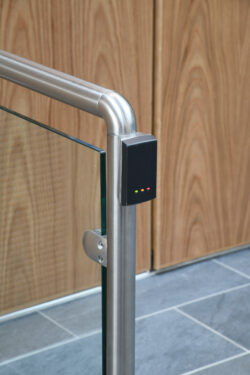
Access control systems have become an increasingly important part of achieving this balance. They allow access permissions to be managed efficiently, protect private accommodation areas and reduce reliance on traditional key management, all while maintaining a straightforward experience for students and building managers.
Lloyd Worrall’s work at the Grand Hotel, Newcastle University, demonstrates how an integrated approach can support both security and accessibility. As part of the refurbishment of the historic building into modern student accommodation, Lloyd Worrall supplied a coordinated package of severe-duty timber doorsets together with a fully online access control system, helping provide secure access while supporting the day-to-day operation of the building.
Designing for durability and long-term value
Student accommodation experiences some of the highest levels of door usage across any building sector. Frequent movement, deliveries, luggage, furniture and general day-to-day activity all contribute to wear over time.
While replacing damaged doors may not feature heavily during specification, it can become a significant maintenance cost once the building is occupied. Selecting products designed for severe-duty environments can therefore provide long-term value by reducing repairs, disruption and future replacement requirements.
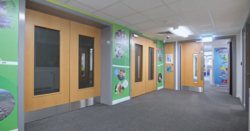
The refurbishment of The Guild at Liverpool University demonstrates this well. The project required robust doorsets capable of withstanding intensive daily use while still contributing to a welcoming environment. Lloyd Worrall supplied 194 severe-duty timber laminate doorsets complete with stainless steel ironmongery, combining durability with an appearance suited to the Grade II listed building. Vision panels were also incorporated to improve light flow through internal spaces while softening the appearance of the doors.
The value of early coordination
Fire safety, acoustics, security and durability are often discussed individually, but they all influence the same doorset.
A decision made to improve one aspect of performance can have implications elsewhere if it is not properly coordinated. Changing hardware, introducing access control or altering glazing arrangements may all affect certification, installation requirements or overall performance if considered too late.
Early coordination helps bring these requirements together before products are ordered or work begins on site. Reviewing specifications, confirming compatibility and understanding how each component contributes to the finished doorset allows projects to progress with greater confidence and fewer unexpected issues during installation.
Bringing everything together
Student accommodation is expected to deliver far more than simply providing somewhere to live. Today’s buildings must offer security, privacy, comfort and long-term durability while meeting demanding fire safety and accessibility requirements.
Achieving that balance is rarely the result of a single product. It comes from coordinated specification, careful planning and selecting doorset solutions that are designed to perform together as a complete system.
Whether delivering new-build accommodation or refurbishing existing buildings, considering these requirements early helps create environments that are safer, quieter and better equipped to meet the demands of student life for years to come.
Get in touch with our team: https://www.lloydworrall.co.uk/contact/
Back To News