

The Benefits of Factory-Fitted vs On-Site Hardware Preparation
In many construction projects hardware preparation isn’t given the time and attention it deserves; often it’s treated as a secondary detail or something that can be resolved later in the schedule once doorsets are on site. When this approach is put into practice, however, it introduces unnecessary risk.
The method of preparation has a direct impact on quality, compliance and installation efficiency. Making the choice between factory-fitted and on-site hardware preparation influences not only how the doorset is installed but also how it performs throughout the building’s lifetime.
It’s a topic that needs nuance and trusted expertise, so we’re here to talk about it.
Factory-fitted vs on-site hardware preparation: what’s the difference?
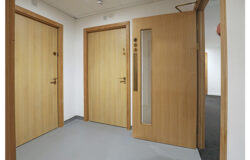
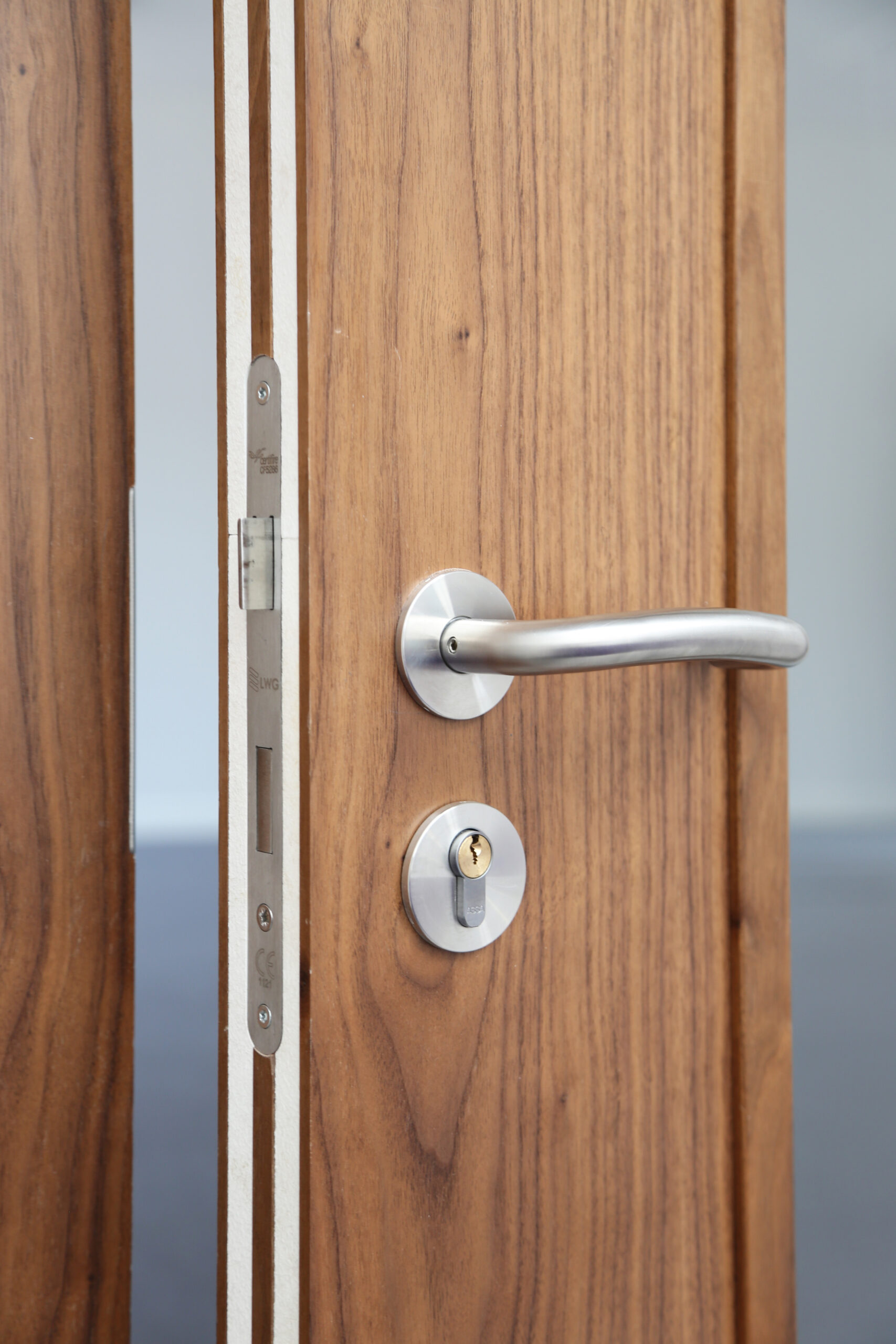
Factory-fitted hardware preparation means non-projecting ironmongery components are prepared and installed in a controlled manufacturing environment before the doorset is delivered to site. This can include hinges, locks, closers and seals. Experienced manufacturers carry out the process using consistent methods, preparing each doorset as a complete, co-ordinated system instead of separate parts.
On-site hardware preparation is the alternative; this is where components are installed as part of the wider site schedule during the assigned phase on-site. Taking this approach can backfire, often involving multiple trades and influenced by site conditions, sequencing pressures and the availability of labour. While this method can achieve a functional outcome, the level of control and consistency between the two approaches differs significantly.
Why hardware preparation matters
Our doorsets are designed to work as integrated systems where each component contributes to overall performance, including fire safety, accessibility, acoustics and durability. Although it may seem insignificant or purely for aesthetics, hardware plays a vital role in this system, affecting how the door opens, closes, seals and interacts with its surroundings and users. When hardware is incorrectly specified or installed, it compromises the performance of the entire doorset, even if the door leaf and frame are compliant.
For example, in fire-rated assemblies, incorrect closer selection or hinge positioning can prevent the door from closing properly, leading to failed inspections. Accessibility can also be affected as poorly adjusted hardware makes doors difficult for users to operate in everyday situations. Many of these issues are identified too late, often when installation is underway or during final sign-off, making them more difficult and expensive to fix.
Benefits of factory-fitted hardware
Factory-fitted hardware provides a controlled environment where installation can be carried out with precision and consistency across every doorset. Each component is fitted using the same tried and tested processes, reducing variations that often occur when installation is carried out on-site under time pressures. Consistency is incredibly important, particularly on larger projects where multiple doorsets must perform in the same way across different areas of a building.
Opting for factory preparation has the added benefit of ensuring hardware has been aligned with tested doorset configurations to help maintain compliance with fire, safety and accessibility standards. By preparing the doorset as a complete system, specifiers significantly reduce the risk of incompatible components or incorrect installation. These benefits extend on-site too, installation of the complete doorset is more efficient as the doors arrive ready to be fitted with minimal or no adjustment required. In busy construction projects this reduces programme delays, limits snagging, and improves the overall quality of the finished installation. Even end-users benefit, high-traffic environments such as healthcare, education, commercial and accommodation need the long-term performance reliability that factory preparation provides.
Where on-site preparation still has a role
Whilst factory preparation has more benefits, on-site preparation remains a viable option for certain types of projects, particularly those with less complex needs or fewer compliance requirements. It can also provide flexibility where late design changes occur, as it’s more forgiving of adjustments made during installation rather than requiring remanufacture.
In certain cases, unique building conditions or bespoke design elements may necessitate on-site preparation to achieve the desired outcome. However, this flexibility comes with increased reliance on the quality of installation and the level of communication and co-ordination between trades. Without clear communication, planning and oversight, the risk of inconsistency and errors increases.
Common challenges with on-site preparation
Arguably the main challenge, and root of most challenges, with on-site preparation is inconsistency. Too much variation in how hardware is installed across different doors can affect door operation, leading to issues such as misalignment, poor closing performance and increased wear over the door’s lifecycle. As anyone who works on-site will tell you, time is precious, and installations are often carried out under strict time constraints, especially towards the later stages of a project where rushed or incomplete work becomes a significant issue.
Simple yet very easy errors such as incorrect positioning, missing components or improper adjustment can have a massive impact, requiring costly reworking that extends the project timeline. Compliance risks are also much higher, particularly when hardware doesn’t match the tested doorset configuration or is installed incorrectly. This means fire doors could fail inspection due to issues that could have been easily avoided through controlled preparation. Poor communication between trades exacerbates these issues and further complicates the process when responsibilities overlap or aren’t clearly defined.
Making the right choice early
Deciding between factory-fitted and on-site hardware preparation is most effective when addressed early in the specification process. Early consideration allows the doorset to be designed as a fully coordinated system, with hardware integrated from the outset rather than added later. This reduces the likelihood of conflicts between components, late-stage changes and installation challenges.
On more complex projects, particularly those with strict compliance requirements, a controlled and consistent approach becomes increasingly important. Considering how the doorset will be manufactured, delivered and installed helps ensure that performance is built into the design rather than corrected on site. Early coordination also supports clearer communication between stakeholders, helping projects run more smoothly from design through to completion.
We’ll help you make the right choice
We understand that the choice between factory-fitted and on-site hardware preparation can be a difficult one. It’s much more than a simple matter of installation preference; it’s a decision that influences the overall success of a doorset package. Our trusted experts can help you make the right decision, factoring in consistency, compliance, programme efficiency and long-term performance, finding the correct method of preparation that plays a critical role at every stage of the project.
Taking a coordinated, system-led approach helps reduce risk, improve quality and ensure that doorsets perform as intended once the building is in use. If you are planning a project and would like to explore the most suitable approach, our team can provide guidance at the specification stage.
Early input can help ensure doorsets are fully coordinated, compliant and ready to perform from day one, so get in touch sooner rather than later: enquiries@lloydworrall.co.uk
Back To News